

Welcome to F3f at White Sheet
White Sheet Hill has long been one of the finest slope soaring sites in the country, and we’re proud to host a number of F3F competitions here each year.

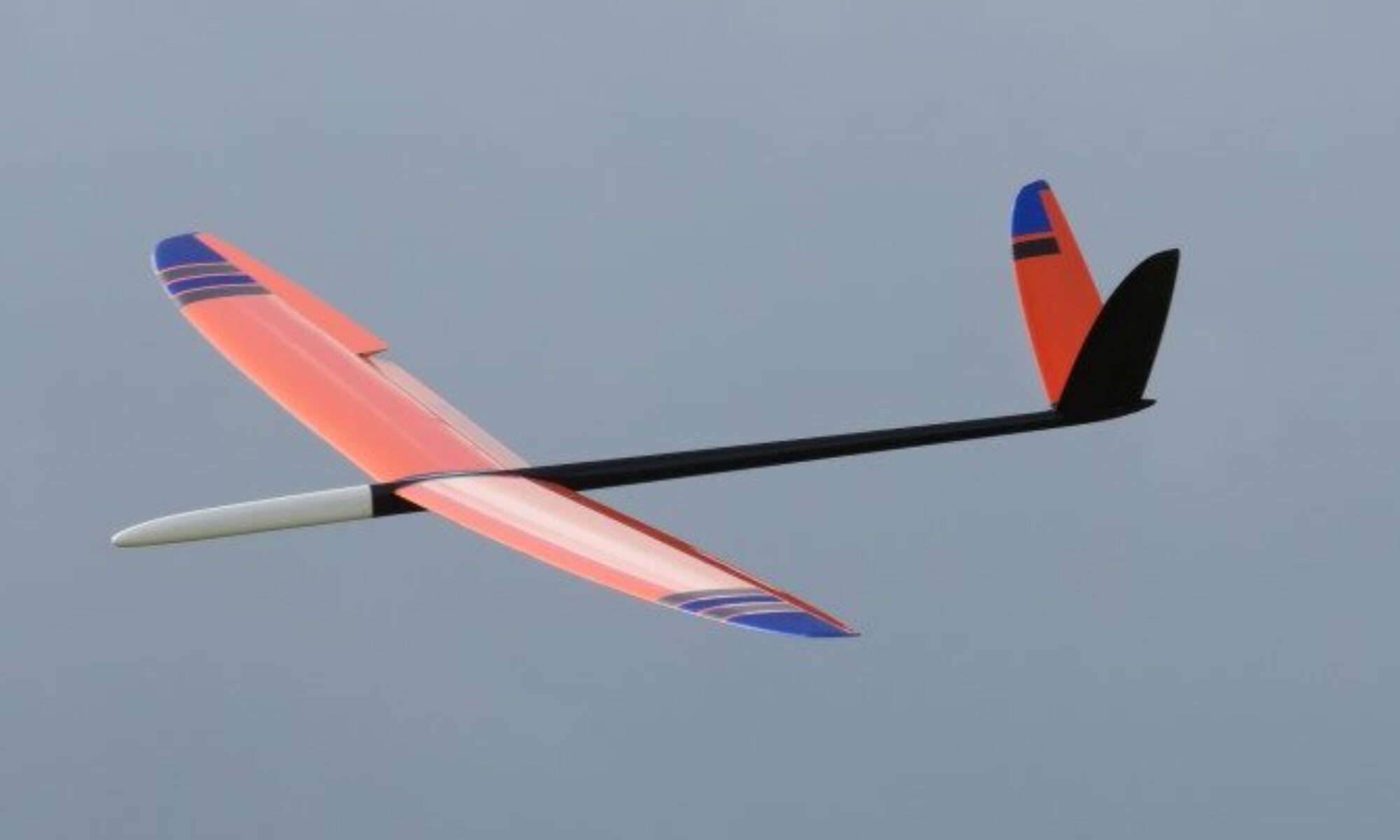
F3F – the Formula 1 of model gliding
F3F – the Formula 1 of model gliding –> is all about precision, nerve and outright speed. On the right day, sleek composite racers carve up the sky, turning tight and fast between the bases with a sound that tells you they mean business. It’s exhilarating to watch, to hear, and even better to fly.

When the British weather cooperates
When the British weather cooperates, we’re fortunate to have a site that consistently delivers the kind of conditions this discipline demands. Add to that a welcoming club atmosphere, well-run events and some of the best pilots in the country on the line, and you’ve got something rather special.
F3F a tradition
Whether you’re competing, helping on the course, or simply enjoying the spectacle, F3F at White Sheet Hill is always a highlight of the season, and we’re delighted to play our part in keeping this great tradition alive.
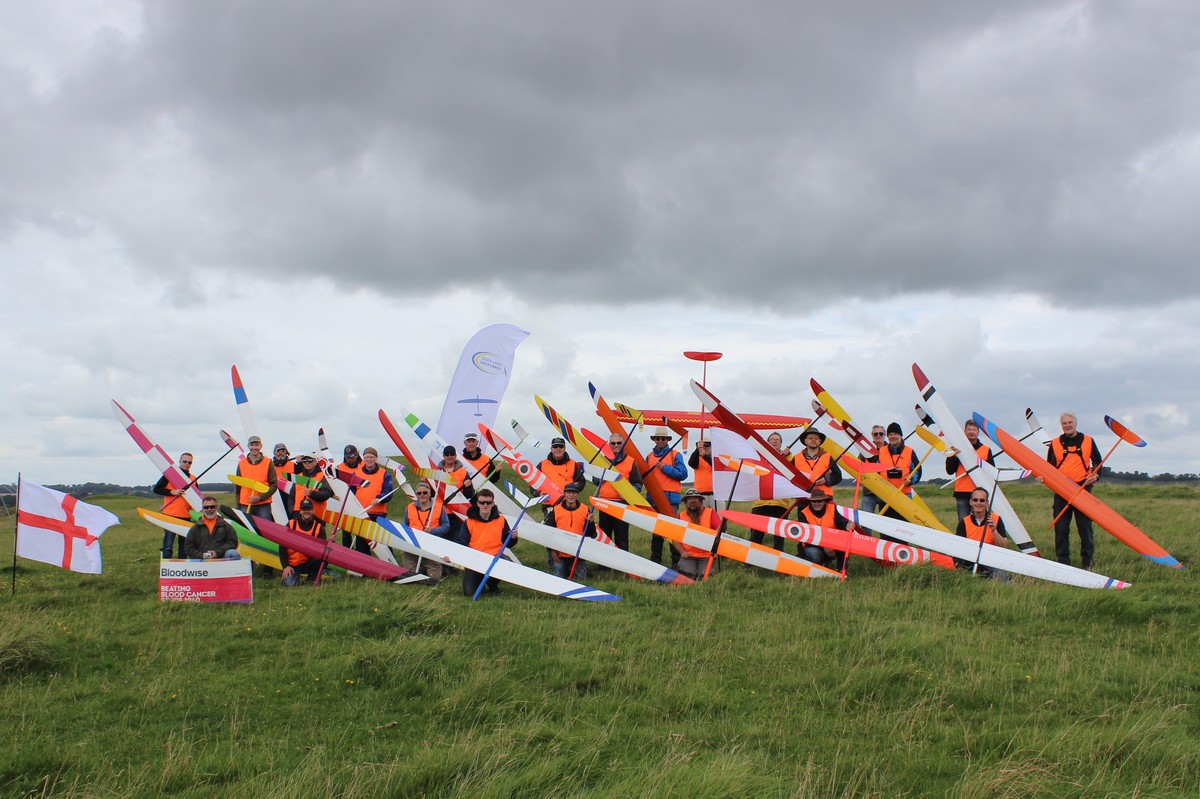

Home Grown Champs
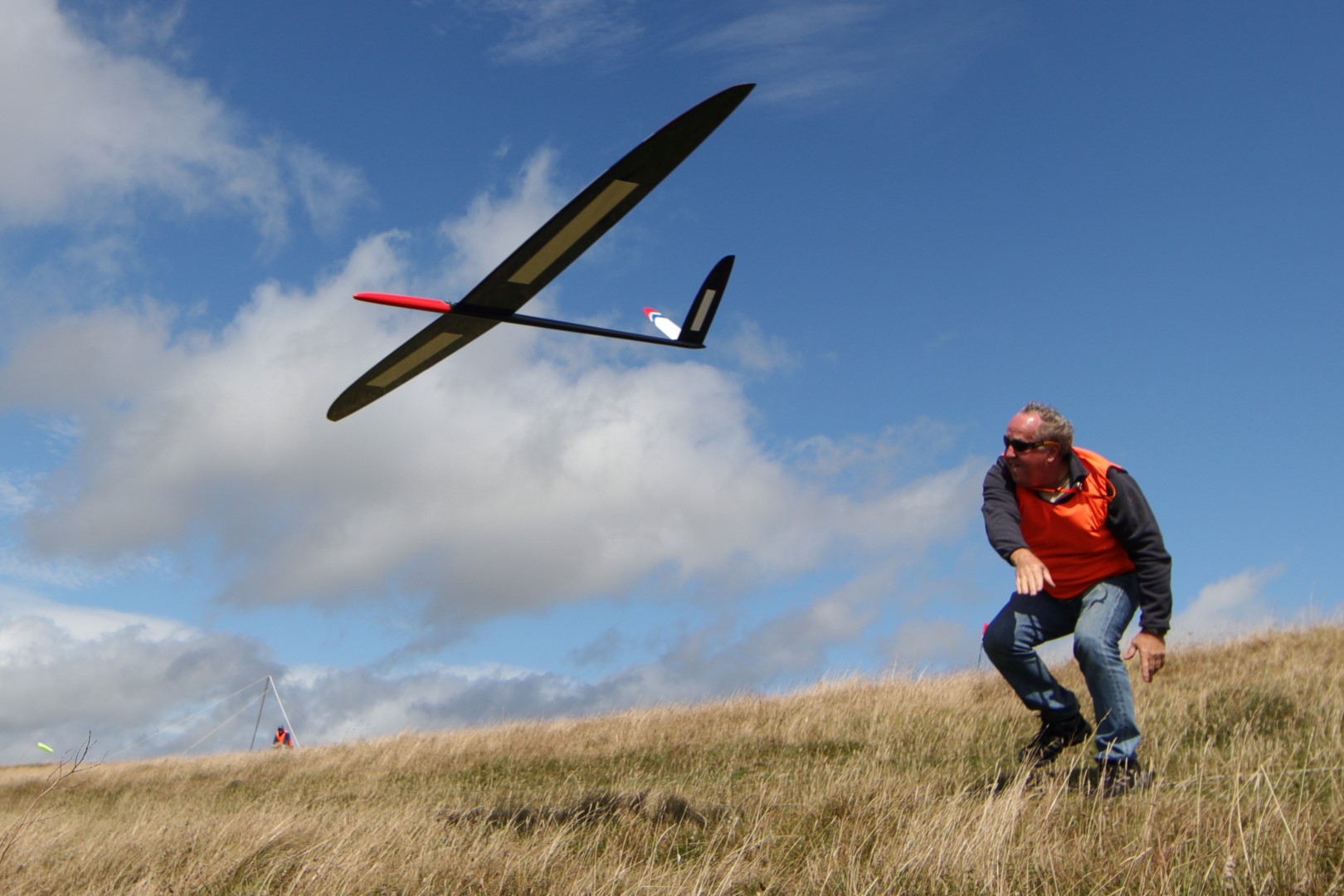
Left photo: White Sheet’s very first home-grown F3F superstar - Graeme Mahoney, clinching the 2024 title by a single point after an almost heroic run of five previous second-place finishes. Proof, if ever it were needed, that persistence eventually has its day.
Right photo: carrying the torch in style, Mike Bleathman - White Sheet’s second home-grown F3F champion — storming to victory in 2025 with a commanding six-point margin. No hanging about with that one.
What is F3F?
F3F is the international competition class for slope racing gliders, governed by the Fédération Aéronautique Internationale(FAI). In simple terms, it is pylon racing for unpowered model aircraft flown on a slope.
The principle
The principle is beautifully straightforward and rather traditional in its purity: no motor, no winch, no aerotow —> just a glider, a hillside and the wind. Pilots use the lift created when wind strikes the slope to keep their aircraft airborne while flying a timed course as quickly as possible.
The Course
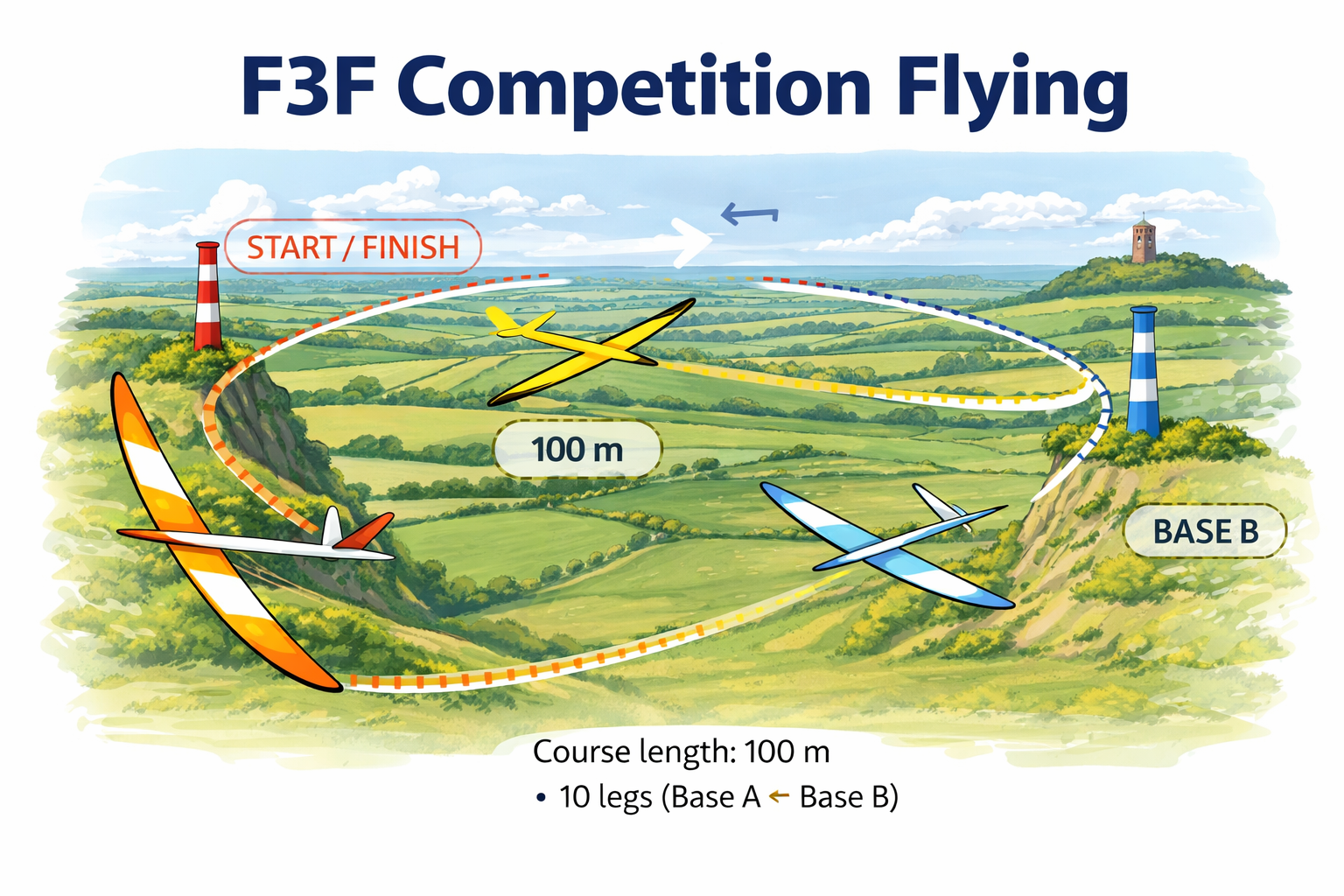
Two base markers are set 100 metres apart along the slope face. After a launch window to gain height and energy, the pilot crosses the start line and begins the task: ten laps between the bases (twenty legs in total). The clock stops as the model completes the final turn and crosses the line.
Fastest time wins.
That’s it on paper. In reality, it’s a demanding test of judgement, energy management and nerve.
The Aircraft
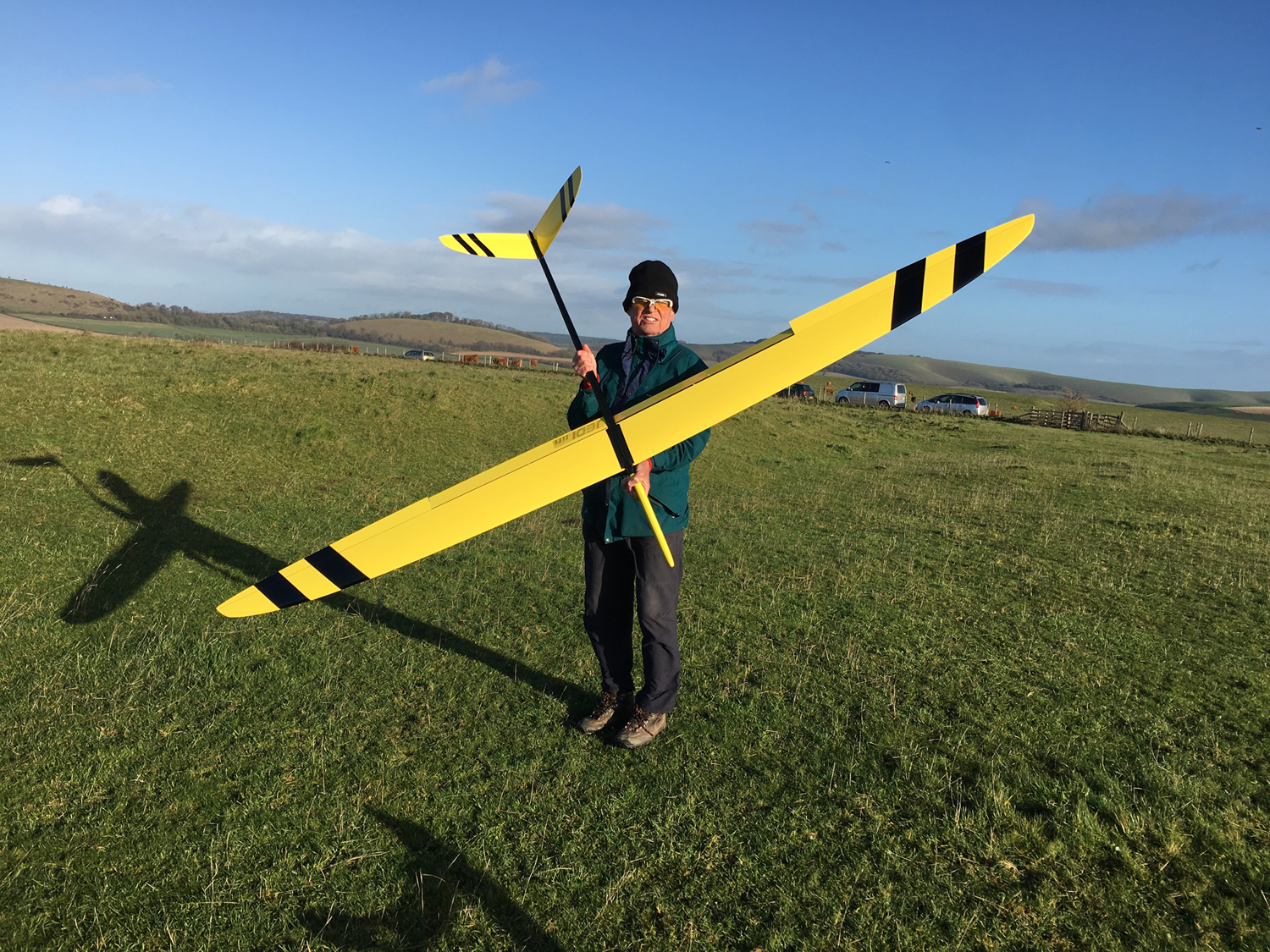
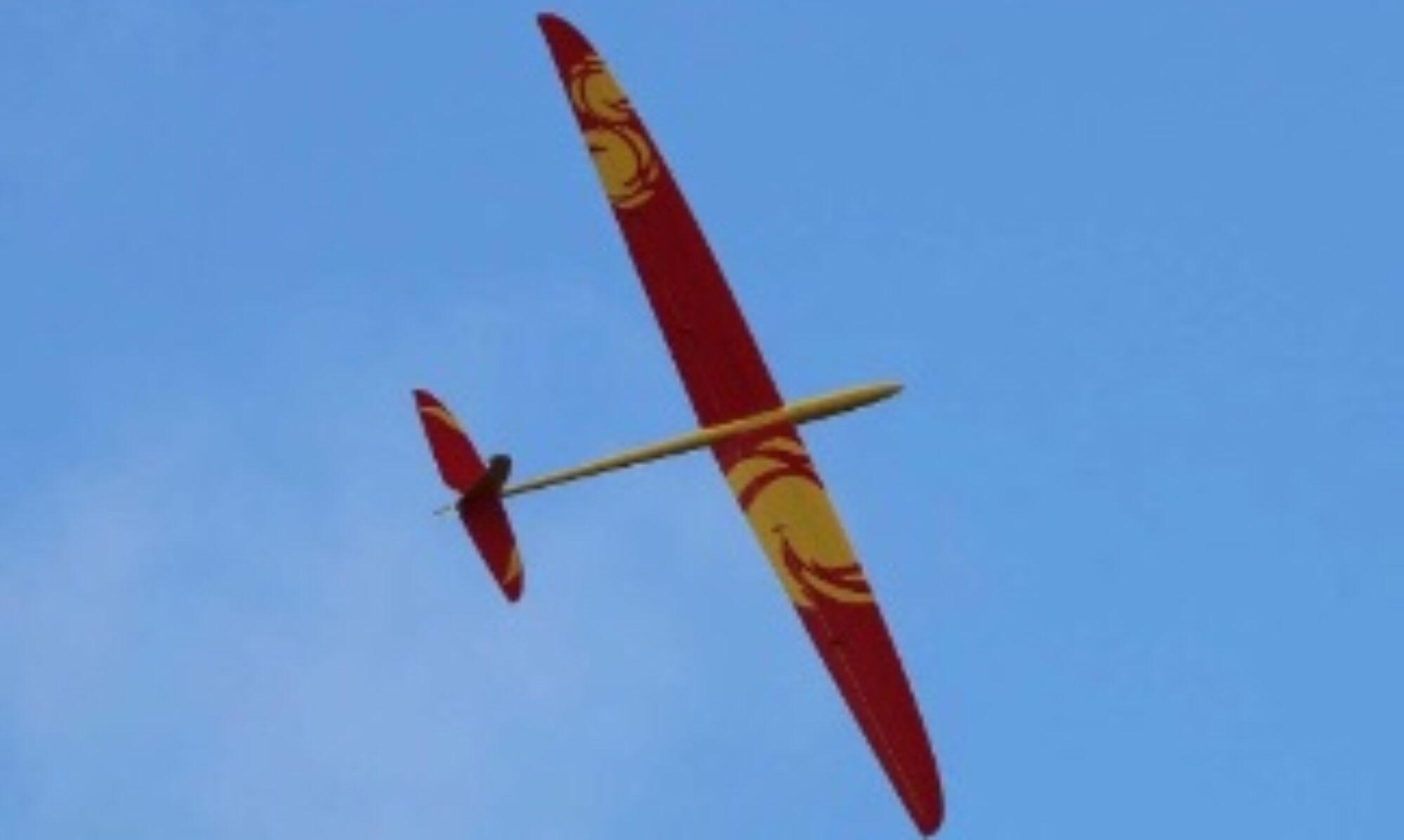
Modern F3F models are purpose-built composite machines, typically around 2.8–3.2 metres span. Carbon fibre, glass fibre and moulded construction dominate. They are designed for:
-
High wing loading
-
Exceptional torsional stiffness
-
Precise control response
-
The ability to carry ballast for stronger winds, modern F3F gliders can comfortably handle 20 m/s (45 mph) and more when ballasted.
These are not floaty thermal soarers. They are thoroughbred slope racers built to slice through heavy air at serious speed while remaining controllable just feet from the hillside.
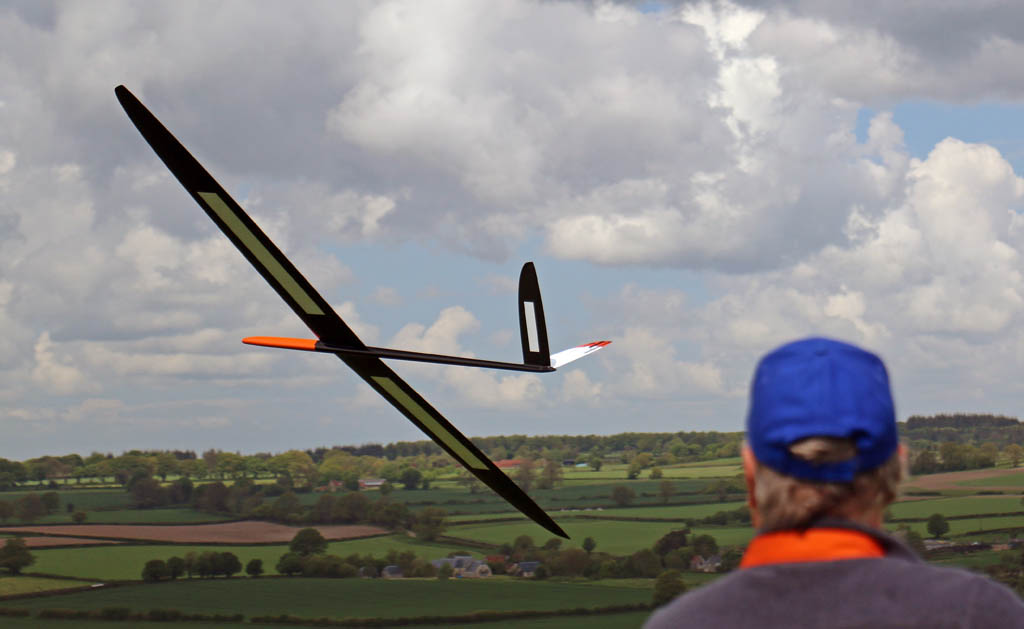
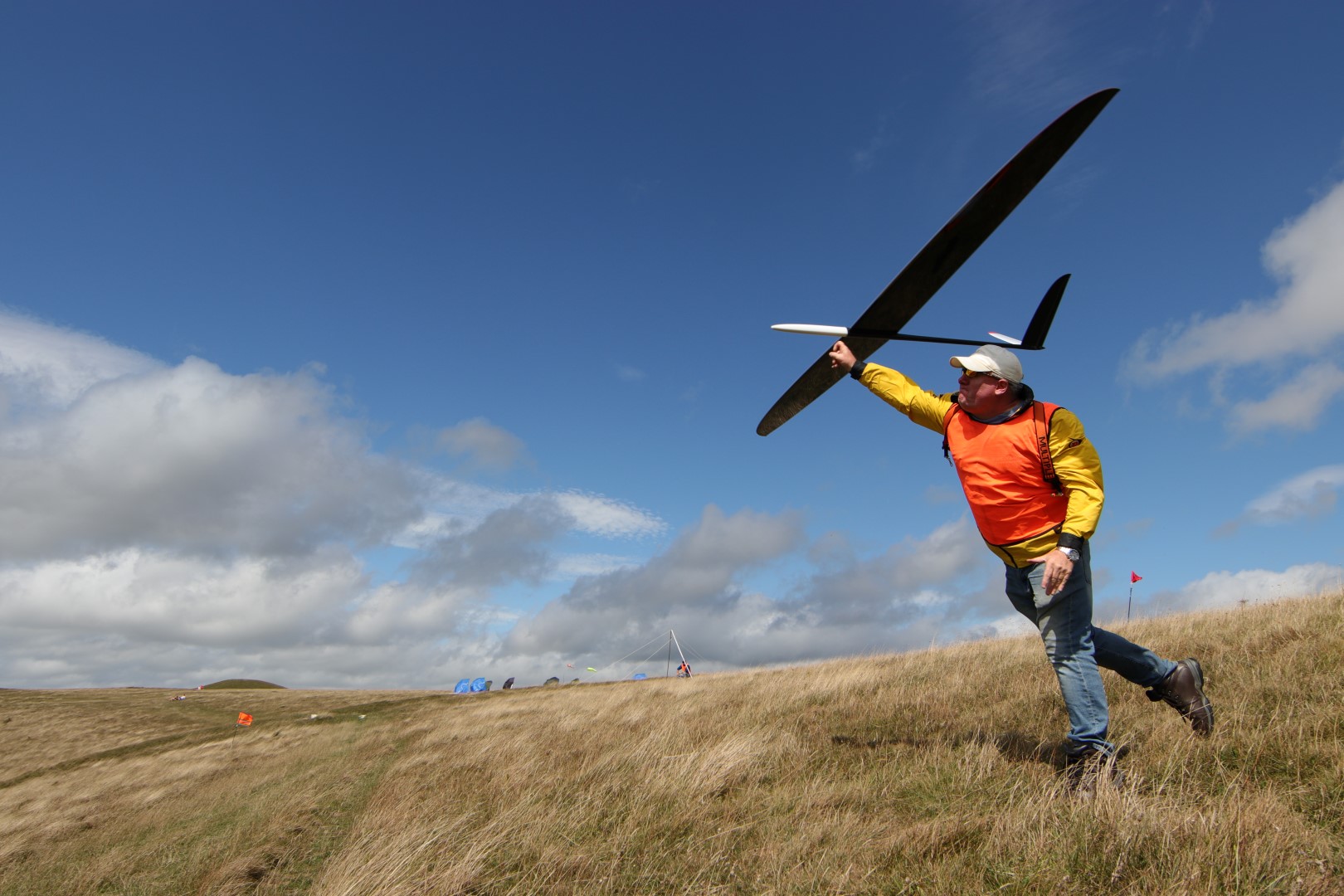
The photo features Mike Bleathman, White Sheet's own grown F3f Champ of 2025. Winning by 6 points!
The Flying
An F3F run is a study in controlled aggression. The pilot must:
-
Launch cleanly and position efficiently
-
Read the air and exploit lift bands
-
Maintain energy through tight, efficient turns
-
Judge the bases precisely (cut them too fine and you risk a penalty or worse!)
-
Adjust ballast and trim as conditions change
Wind strength, direction and air quality can change from round to round, so adaptability is crucial. The best pilots are those who can read the conditions as well as they handle the sticks.

The Conditions
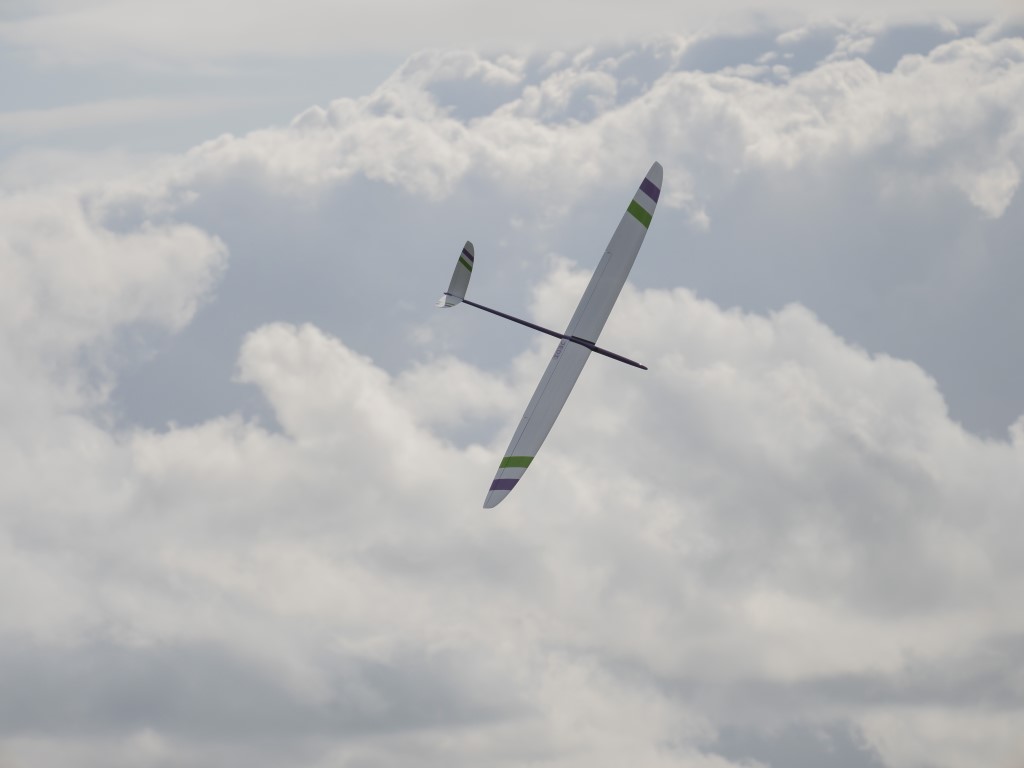
F3F only works when nature plays along. It requires a solid, reasonably consistent wind striking the slope at a favourable angle. Too light and there isn’t enough lift. Too turbulent and the course becomes unpredictable. When the air is right, however, the models accelerate in a way that surprises anyone seeing it for the first time.
Modern F3F models can comfortably handle 20 m/s (45 mph) and more when ballasted, but:
-
Launching becomes hazardous.
-
Landing becomes dangerous.
-
Turbulence behind the lip may make the course unsafe.
-
Retrieval may become risky.
In practice:
• 12–18 m/s (27–40 mph) is strong but normal for big events.
• 20+ m/s (45+ mph) becomes physically demanding and potentially unsafe.
• Beyond that, events are often paused for safety, not legality.
In short
There is:
• No formal minimum wind speed written in the rules.
• No formal maximum wind speed written in the rules.
The decision is operational and safety-based, not numeric.
F3F has always relied on judgement —> a very British, common-sense way of doing things. If it’s flyable, fair and safe, it runs. If it isn’t, you wait for the wind to behave… or you go home and try again another day.
And as anyone who flies White Sheet knows —> the wind always has the final say.
Competition Format
Pilots fly multiple rounds over the course of a day or weekend. Everyone flies the same task under broadly the same conditions, with times normalised per round. Consistency matters as much as outright pace. One mistake can undo an otherwise excellent performance.
Why It Endures
F3F has survived because it is simple in concept but deep in skill. It rewards preparation, discipline and sound flying — the fundamentals that have always defined good aeromodelling. There are no gimmicks. Just wind, slope and pilot.
When conditions align and a fast machine is carving the course at full chat, the combination of speed, precision and that unmistakable tearing sound across the lift band reminds you exactly why this class continues to command respect.
It is slope soaring distilled to its competitive essence.

Interested? Want to learn more?
If F3F has sparked your interest and you’d like to see what it’s all about, you’d be very welcome. The best way to understand slope racing is to watch it in action, stand on the line, feel the air, and hear the models working the lift band. It’s an education in itself.
For those who want to dig a little deeper, you can find full international class rules via the Fédération Aéronautique Internationale (FAI) website, the Great Britain Slope Racing Association GBSRA website and UK competition information through the British Model Flying Association (BMFA) website. Both provide useful background on how the class is structured and governed.
If you’re thinking about competing or simply want to ask a few questions —> please get in touch with our Competition Secretary via the club’s Contact page. They’ll be pleased to point you in the right direction and explain what’s involved.
Everyone starts somewhere. If you’ve got the interest, the rest can be learned.
Whitesheet slope closure information
To ensure the safe and successful running of F3F competitions at White Sheet, the club reserves the slopes exclusively for F3F flying while competition rounds are in progress. During these periods, the slopes are closed to all flying not directly connected with the event.
This temporary arrangement allows the course to function correctly, safeguards pilots and helpers, and ensures the competition is conducted fairly and in accordance with class requirements.
The White Sheet Committee sincerely thanks all members and visitors for their understanding and cooperation.


F3F Events
As previously mentioned we have a full schedule of F3F competitions every year and those dates can be seen here F3F Events
We have to work with the British weather. If conditions have been reasonably stable and the forecast looks favourable, the Competition Secretary will notify members that the event is on, usually during the week preceding the scheduled date. However, due to the unpredictable nature of our weather, we often wait until as close to the event as possible to give the competition the best chance of running. In most cases, the final decision is made on the Friday before the event, though occasionally it may be as late as the day prior.
These “weather calls” will be published on the club website front page, emailed to members, and announced via WhatsApp. (Don’t forget to ask us to add you to the WSRFC WhatsApp group.)
We hope to see you at a competition very soon.